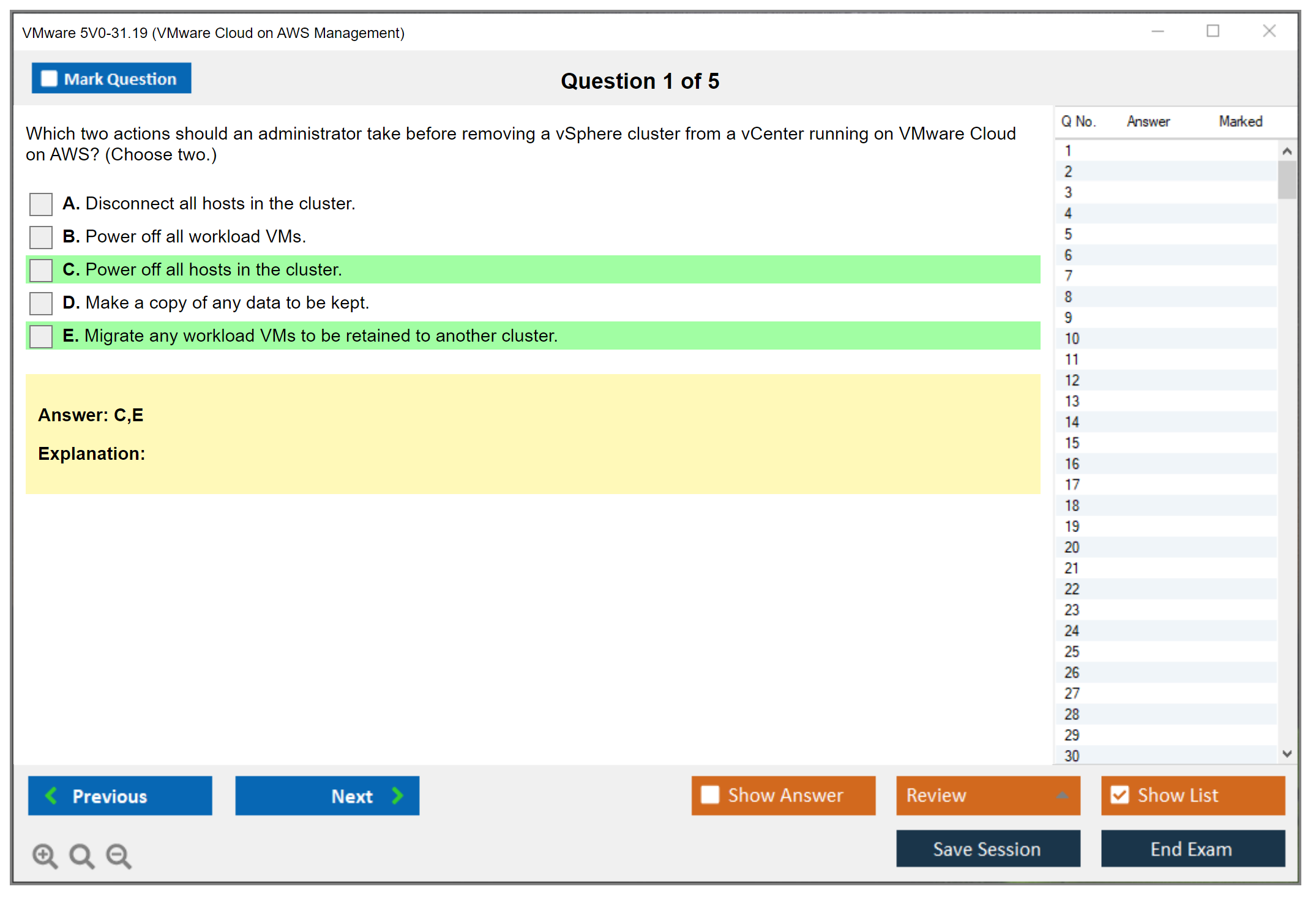
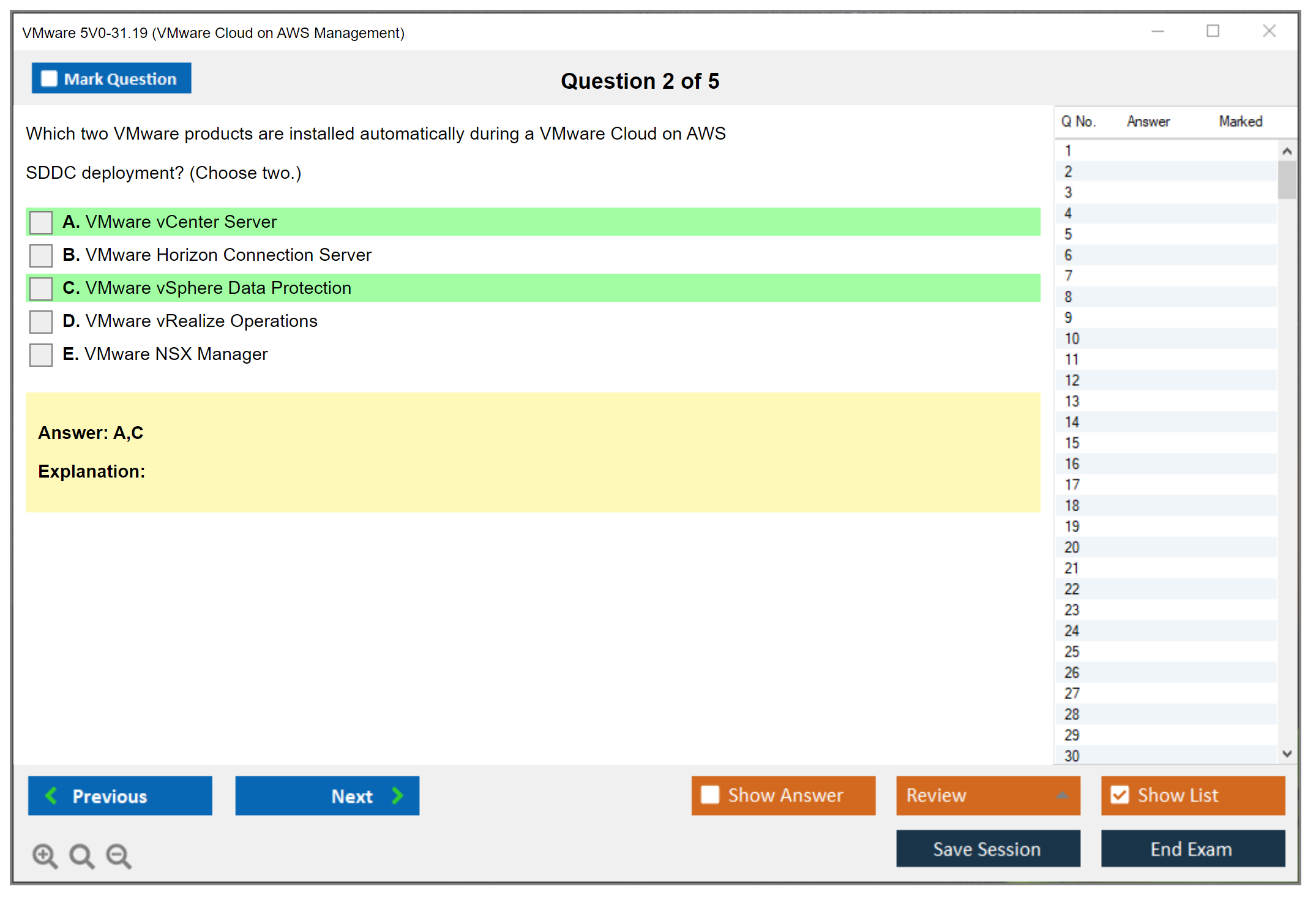
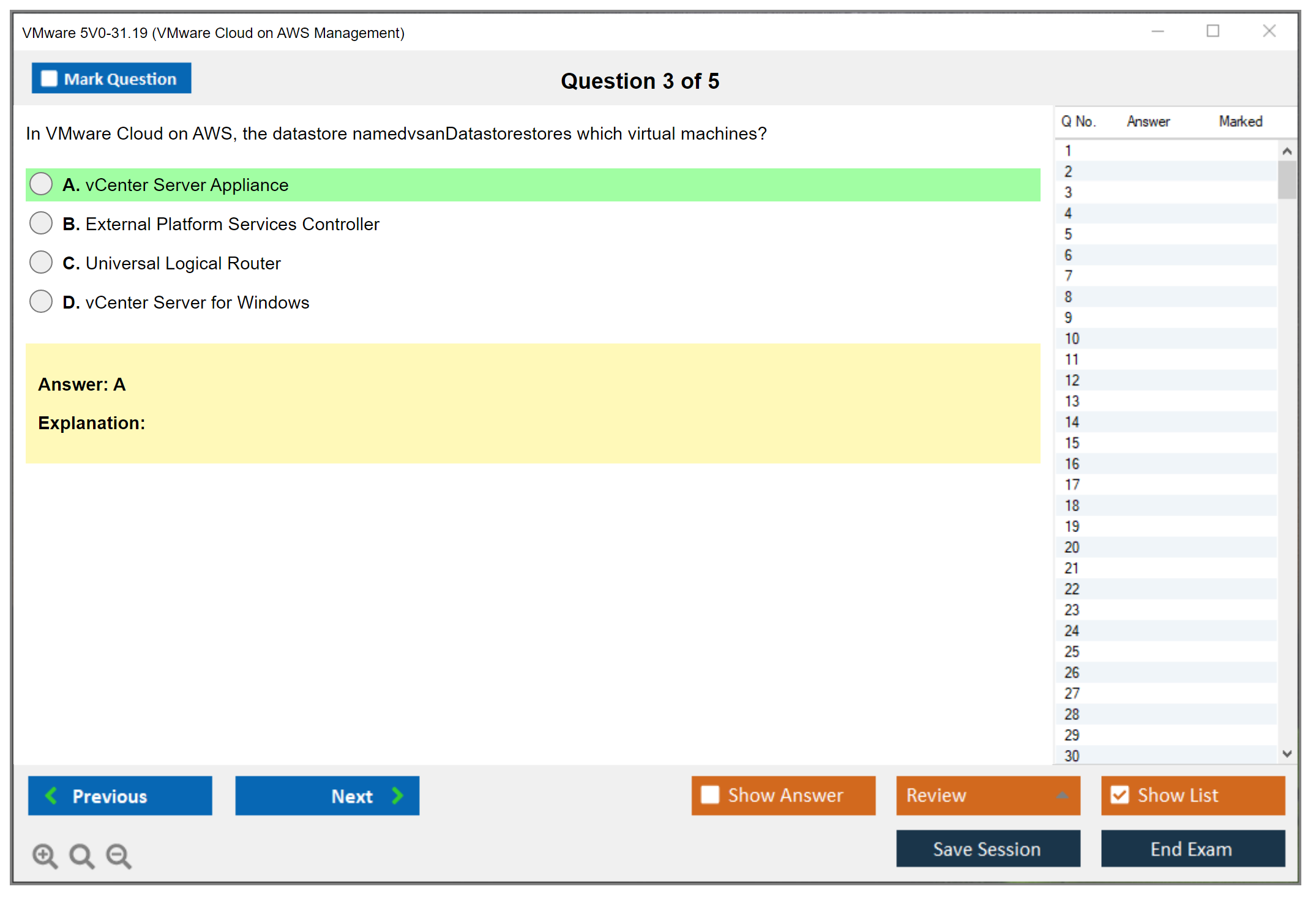
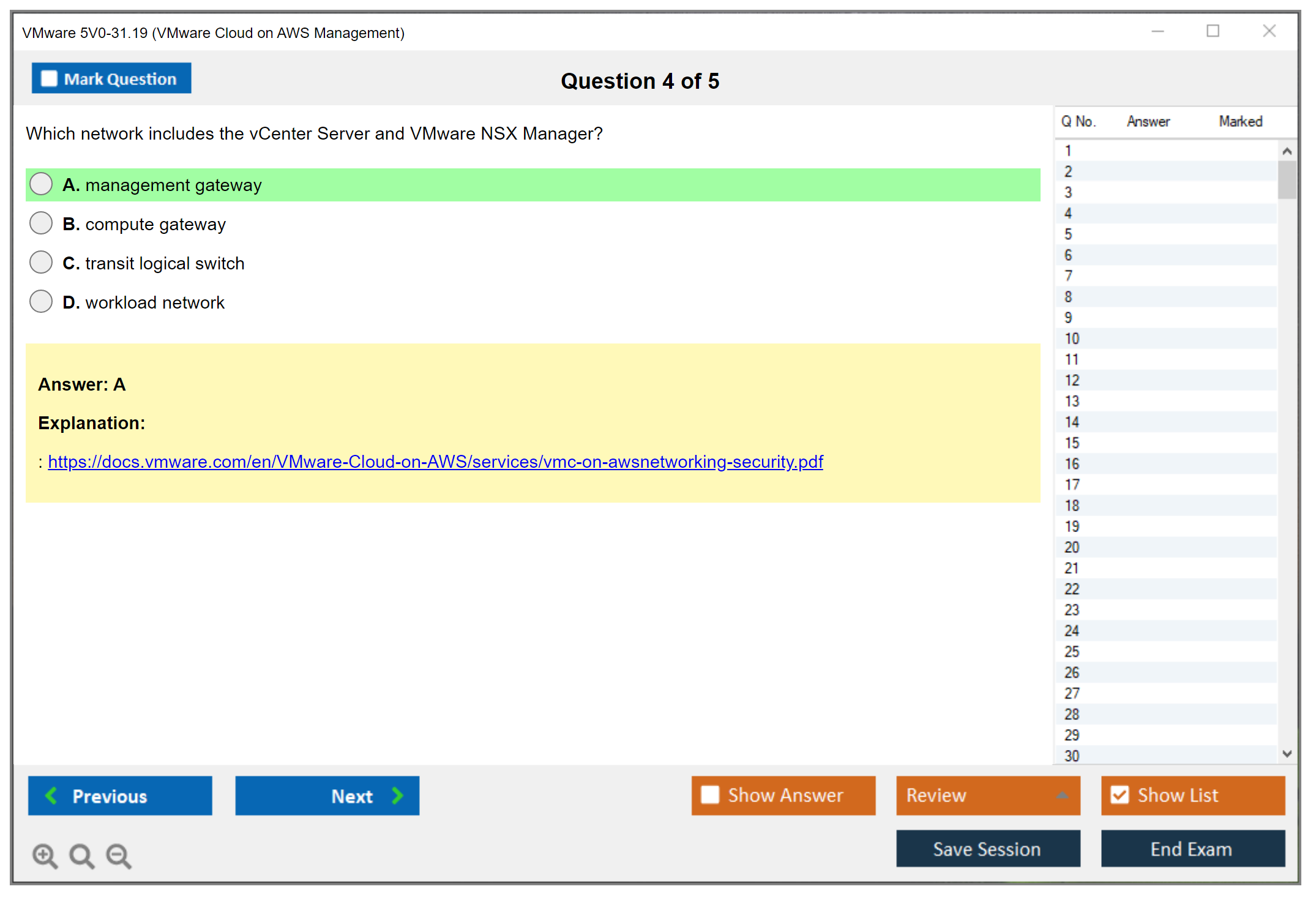
5V0-31.19 Exam Guide: Verify the Path Before You Prepare
5V0-31.19 is identified by Broadcom’s certification community as the VMware Cloud on AWS Management Exam. The available official evidence confirms its title, but does not provide a current blueprint, registration listing, delivery specification, or measured-skill percentages. That makes the first candidate decision administrative rather than technical: establish whether this legacy code is still available and which current exam, if any, replaces it. This guide explains how to verify that position, build relevant VMware Cloud on AWS knowledge, and avoid preparing from unverified exam-dump claims.
What does 5V0-31.19 represent?
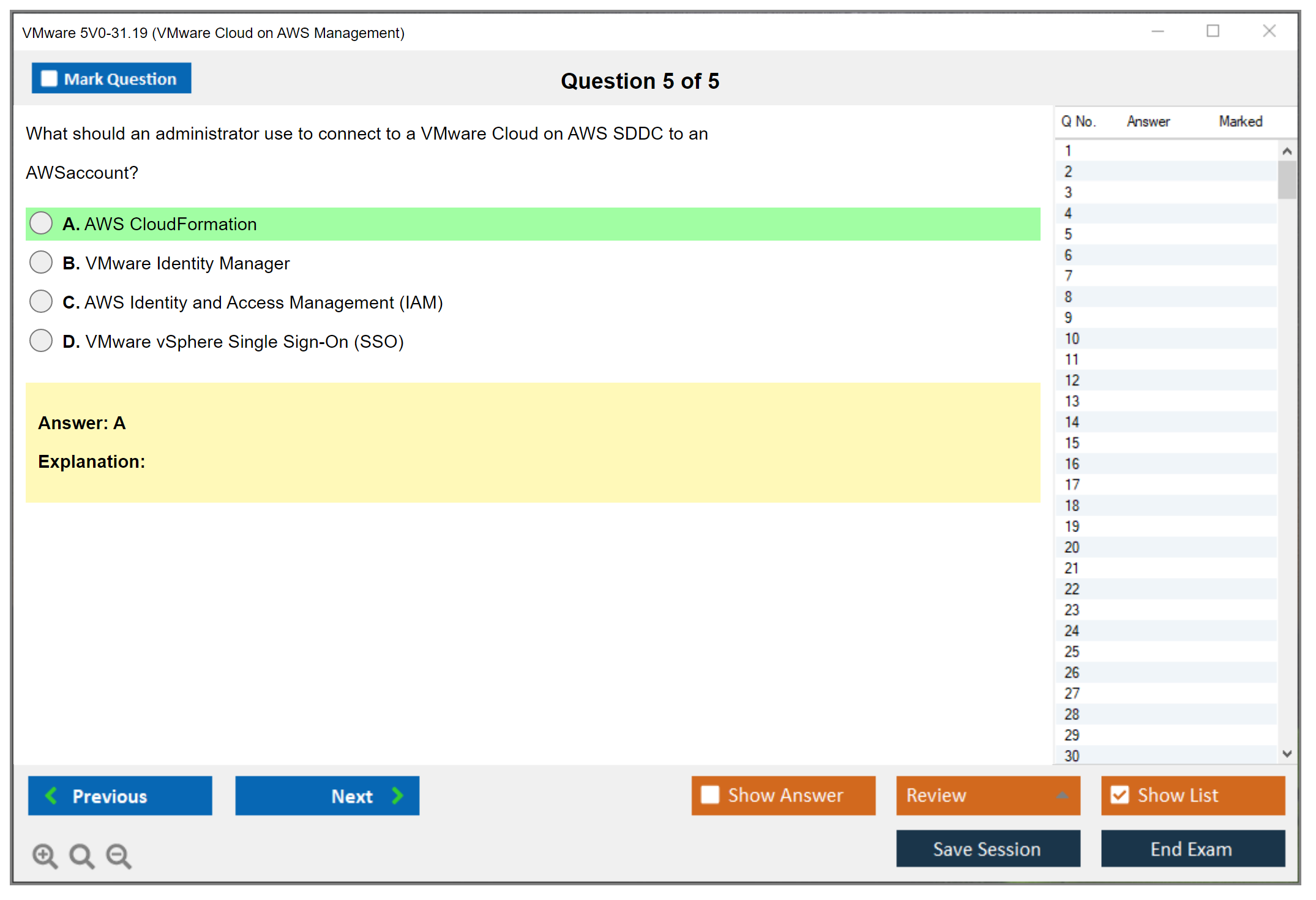
Broadcom’s official community discussion names 5V0-31.19 the VMware Cloud on AWS Management Exam. The same discussion records a candidate’s difficulty finding the exam in Pearson VUE and a responder pointing to the then-current VMware Cloud on AWS badge page. It confirms the historical identity of the code, not current availability or an active registration route.
The discussion was published on July 2, 2021, so it should be treated as historical evidence about the code rather than a current scheduling notice. A community thread is also not a substitute for an exam guide, current certification page, or registration confirmation.
For a candidate researching 5V0-31.19 on dumpsboss.co, the practical conclusion is simple: do not assume that a page listing the code proves that the exam can be booked. Verify the code through Broadcom’s current certification information and the relevant Pearson VUE program before investing in code-specific preparation.
What is confirmed and what is not?
Confirmed: the official Broadcom community labels 5V0-31.19 as the VMware Cloud on AWS Management Exam. Not confirmed in the supplied official research: a current exam guide for 5V0-31.19, its objective domains, question count, time limit, language, passing score, price, delivery method, prerequisites, or retirement date.
Those missing details matter. They determine whether a study plan is aligned to the right version and whether a candidate can actually schedule the assessment. Do not transfer the published details of another exam code to 5V0-31.19 merely because both concern VMware Cloud on AWS.
Should you schedule 5V0-31.19 or investigate a successor?
Investigate the current certification route before scheduling. The supplied evidence does not establish an active registration path for 5V0-31.19, while Broadcom’s official 2024 successor-era guide identifies VMware Cloud on AWS Master Specialist 2024 as exam 5V0-33.23. That newer code has its own exam structure and should not be presented as identical to 5V0-31.19.
The 2021 community discussion is especially useful as a warning. A candidate reported that 5V0-31.19 was not listed in Pearson VUE, and the response directed the candidate to the latest VMware Cloud on AWS badge page rather than supplying an active 5V0-31.19 registration listing. The thread therefore supports verification, not a claim that the older exam remains open.
The official Broadcom page supplied for the VMware Cloud on AWS Master Specialist exam concerns 5V0-11.21, not 5V0-31.19. It states that 5V0-11.21 retired on December 15, 2025, and that new registrations were unavailable after October 31, 2025. Those dates must not be applied to 5V0-31.19. They demonstrate why exam-code precision is essential.
A safe verification sequence
Use this order before selecting a test date: first, read the current Broadcom certification page for the VMware Cloud on AWS track; second, locate the applicable official exam guide; third, check the exam-program route in Pearson VUE; and fourth, confirm that the exact code appears in the scheduling workflow before paying or reserving time.
Pearson VUE’s login directory explains that each exam program has a unique login and that some programs redirect candidates to the program owner’s website. Therefore, an unsuccessful search in a general Pearson VUE area is not by itself proof of retirement, but an exact-code confirmation is still necessary before preparation becomes code-specific.
If Broadcom’s current material points to 5V0-33.23 or another successor, move your planning to that official code. Record the guide title and revision date, then use only objectives attached to that code. If no current route is found, pause scheduling and contact the certification program through its official support channel rather than relying on third-party listings.
Do not confuse adjacent exam codes
The supplied research includes official details for 5V0-11.21 and 5V0-33.23, but neither is 5V0-31.19. The 5V0-11.21 page describes an exam that tests deploying, configuring, and managing VMware Cloud on AWS infrastructure. The 5V0-33.23 guide identifies a later successor-era assessment. These facts provide direction for current research, not permission to merge blueprints.
Who is the likely candidate?
The strongest official candidate profile in the supplied research comes from the 5V0-11.21 preparation guide: a minimally qualified candidate has experience deploying, configuring, and managing VMware Cloud on AWS infrastructure, together with strong virtualization, networking, storage, and AWS knowledge. Because that guide is for 5V0-11.21, use the profile as preparation context rather than as a verified 5V0-31.19 prerequisite.
This profile suits administrators and cloud infrastructure practitioners who can connect VMware operations with AWS design and account considerations. Reading product terminology alone is unlikely to build the judgment needed for management scenarios. A candidate should be able to explain why a configuration is appropriate, what dependency it has, and what operational consequence follows from changing it.
There is no supplied official evidence that 5V0-31.19 required a particular course, certification, employment history, or formal prerequisite. Do not describe the adjacent candidate profile as an entry requirement. Treat it as a readiness benchmark and verify any current eligibility rule with Broadcom.
Use a readiness conversation, not a title match
Before studying, write down the VMware Cloud on AWS tasks you have actually performed: SDDC planning, network connectivity, workload migration, storage decisions, identity or account integration, and operational management. Mark each task as hands-on, observed, or theoretical. This exposes gaps more reliably than deciding that a job title automatically matches the exam audience.
A candidate with strong vSphere experience but limited AWS networking should not begin with memorized service names. A candidate with AWS experience but little vSphere administration should first close the virtualization and vSAN concepts that connect the two environments. The best starting point depends on the weaker side of that combination.
Which skills should your preparation emphasize?
No official 5V0-31.19 blueprint or domain-weight table is included in the supplied research, so no measured-skill percentages can be stated responsibly. The available preparation guide for 5V0-11.21 lists relevant objective areas: VMware Cloud on AWS architecture, migration solutions, integrations with VMware products, use cases, accounts, networking, connectivity, SDDC sizing, and vSAN storage.
These topics are a sensible knowledge map for investigating the technology, but they are not a verified 5V0-31.19 outline. Keep two columns in your notes: “officially confirmed for the target code” and “useful adjacent preparation.” Until a target-code guide is located, place every topic in the second column.
Do not infer priority from an unsourced blog, practice-question site, or the order in which topics appear on a web page. If a current official guide supplies domain percentages, reproduce each percentage only with its exact domain label. The present research supplies no such weights for 5V0-31.19.
Architecture and service boundaries
Begin by explaining the relationship between VMware Cloud on AWS, the software-defined data center, AWS infrastructure, and the surrounding account and network model. Your notes should distinguish responsibilities, dependencies, and design choices rather than merely listing components. A useful test of understanding is whether you can describe what a design decision changes operationally.
Migration and use-case reasoning
Study migration as a decision problem. For each workload scenario, identify the source environment, connectivity requirement, compatibility concern, operational constraint, and rollback or continuity consideration. The official adjacent guide names migration solutions and use cases, but the supplied evidence does not identify which specific scenarios belonged to 5V0-31.19. Avoid presenting a chosen tool or workflow as target-code coverage without confirmation.
Networking and connectivity
Networking deserves hands-on treatment because it joins VMware administration to AWS design. Build diagrams showing management, workload, and external connectivity relationships, then annotate dependencies and failure points. Review how routing, security controls, addressing, and connectivity choices affect migration and administration. Use current product documentation for technical detail, while keeping the exam objectives tied to the verified guide for the code you will take.
Sizing and storage
Practice explaining SDDC sizing and vSAN storage decisions in terms of workload requirements, capacity, performance, resilience, and growth. Do not reduce sizing to a memorized lookup table. The adjacent official guide names SDDC sizing and vSAN storage as objectives, but it does not establish a 5V0-31.19 weighting or current version.
Accounts and integrations
Map the account relationships and integrations that a management candidate must understand. For each integration, record its purpose, prerequisites, trust or access relationship, and effect on administration. The official adjacent objective list includes AWS accounts and integrations with VMware products; treat those as a study direction until the exact 5V0-31.19 blueprint is found.
How should you prepare without a verified blueprint?
Use a two-stage plan: first, verify the exam and collect its official objectives; second, study the technology through architecture diagrams, documented procedures, and scenario explanations. This prevents a common failure mode in legacy-exam preparation—spending time mastering an old or unrelated outline because a third-party page retained the code.
Do not begin with dumps or recalled questions. Exam dumps may be outdated, unauthorized, incomplete, or wrong, and memorizing them does not establish that you can deploy, configure, manage, or troubleshoot a real environment. Use practice questions only when their source, version, and alignment with the official objectives are clear, and treat them as a diagnostic tool rather than a question forecast.
Keep an evidence log for every study topic. Record the official source, the product version or date where relevant, the concept in your own words, and a practical example. This makes it easier to remove obsolete material when Broadcom confirms a successor or publishes a revised guide.
A useful study sequence
Study in dependency order rather than alphabetically. Start with the platform architecture and service boundaries. Add AWS account and identity relationships. Then work through networking and connectivity, because those concepts support migration and operations. Finish the first pass with SDDC sizing, vSAN storage, integrations, and use-case decisions. Revisit the sequence using scenario questions after each group.
For every topic, produce three artifacts: a one-page concept summary, a labelled architecture diagram, and a short decision record explaining when a design is suitable and what trade-off it introduces. This approach turns passive reading into material you can review and challenge.
How to use a lab or demonstration environment
Where an authorized lab or work environment is available, perform small, repeatable tasks rather than attempting an undocumented full deployment. Capture the starting assumptions, configuration path, expected result, and recovery step. If you cannot access a live environment, reconstruct the workflow from official documentation and explain each dependency aloud; do not claim hands-on proficiency from reading alone.
A lab should answer questions such as: what must exist before a connection or integration can be configured, which settings affect reachability, how a storage choice changes capacity planning, and what evidence confirms that a change worked. Those questions develop transferable understanding without pretending to reproduce live exam items.
What practical roadmap should you follow?
A practical roadmap begins with an administrative checkpoint, continues through a capability inventory, and then moves from foundations to scenario review. The time allocated to each stage should depend on your experience and the availability of an official target-code blueprint; the supplied evidence does not justify a fixed preparation duration.
Do not set a test date simply to create pressure while the code is unverified. Set the date only after the exact exam appears in an official scheduling path and you have confirmed the guide that governs it. If the program has moved to a successor, restart the roadmap against the successor’s objectives rather than carrying forward assumptions.
Checkpoint 1: establish the target
Save the current Broadcom certification page, official exam guide, and scheduling reference. Confirm the exact code, title, status, language, delivery details, and any eligibility information from those sources. If one of these cannot be confirmed, label it unknown in your plan. This checkpoint prevents a legacy listing from controlling your preparation.
Checkpoint 2: assess your baseline
Rate your ability to explain architecture, accounts, networking, connectivity, migration, integrations, sizing, and storage without notes. Separate “I recognize the term” from “I can select and justify an action.” Then choose the first study block from the weakest dependency, not from the topic you already find comfortable.
Checkpoint 3: build and connect knowledge
Create the diagrams and decision records described above. Link each design choice to a requirement and an operational consequence. Review the material with a colleague if possible, asking them to challenge assumptions about AWS boundaries, VMware administration, connectivity, and storage. The goal is defensible reasoning, not a longer glossary.
Checkpoint 4: perform an evidence-based review
Use the official objectives as a checklist and mark each item as explain, perform, or investigate. For investigate items, return to documentation or an authorized lab. For explain items, answer in your own words and include dependencies. For perform items, document the procedure and validation step. Only schedule when the review reflects the confirmed exam version.
Checkpoint 5: verify immediately before booking
Recheck the official certification page and scheduling route immediately before booking because legacy programs and successor relationships can change. Confirm that the code displayed at registration matches the code in your study plan. Keep the confirmation and the governing exam guide together so that later third-party updates do not silently change your target.
Which mistakes waste the most preparation time?
The largest mistake is treating 5V0-31.19 as unquestionably active because a search result or training page still displays it. The official discussion itself shows historical difficulty locating the code, and the supplied research contains successor-era information for other VMware Cloud on AWS exams. Resolve status first.
A second mistake is borrowing the 5V0-11.21 format—English delivery, 130 minutes, 65 questions, a scaled passing score of 300, proctored delivery, and a price of $250 USD—and publishing it as 5V0-31.19 information. Those details belong to 5V0-11.21 and must remain attached to that exact code.
A third mistake is claiming measured coverage without a blueprint. The adjacent guide’s topic list is useful for study planning, but it does not provide 5V0-31.19 percentages. Never compare bare percentages or imply that an unverified topic has a larger share of the target exam.
A fourth mistake is studying only terminology. Management work depends on relationships among architecture, accounts, networking, migration, sizing, storage, and integrations. Build explanations and diagrams that show how a decision affects the wider environment.
Finally, do not use leaked questions, exam dumps, or memorization as a substitute for competence. They can mislead you about the current version and leave you unable to explain why an answer is appropriate.
A quick quality test for study material
For each practice item or note, ask four questions: Is the source official or clearly identified? Which exact exam code does it support? Is the product version stated? Can I explain the answer using a documented principle rather than recognition? If the material fails these checks, use it only as a prompt for research or discard it.
What should you do next?
Start by checking Broadcom’s current VMware Cloud on AWS certification information and the official exam-program route. Search for 5V0-31.19 by its exact code, then check whether Broadcom directs candidates to 5V0-33.23 or another current assessment. Do not pay for a booking or rely on an exam-dump page until the registration path and governing guide agree.
If 5V0-31.19 is unavailable, preserve the useful subject knowledge but rebuild the study checklist for the confirmed successor. Broadcom’s 2024 guide identifies 5V0-33.23 as VMware Cloud on AWS Master Specialist 2024 and specifies 64 items, a scaled passing score of 300, and a 135-minute appointment time. Those details apply to 5V0-33.23, not to the legacy code.
If the code is confirmed as available through an official route, obtain the current 5V0-31.19 objectives before making a final plan. Then map each objective to a source, a diagram or procedure, and a scenario-based self-check. That is the most reliable way to turn uncertain catalogue information into a defensible preparation decision.
Official references to check
The Broadcom community discussion is the source for the historical name and the reported Pearson VUE search issue. The Broadcom exam page and preparation guide supplied here concern 5V0-11.21, so use them for version and successor research only where the exact code is preserved. The 2024 guide is the relevant official reference when investigating 5V0-33.23. Pearson VUE’s directory explains how exam-program login routes work.
Conclusion
5V0-31.19 should be approached as a legacy exam code requiring verification, not as a reliably bookable current assessment. The official evidence confirms its historical title but does not confirm a current blueprint or delivery specification. Check the exact code with Broadcom and Pearson VUE, identify any official successor, and then study the underlying VMware Cloud on AWS capabilities through documented objectives, diagrams, scenarios, and authorized practice. That sequence protects your time and keeps your preparation tied to an exam you can actually take.